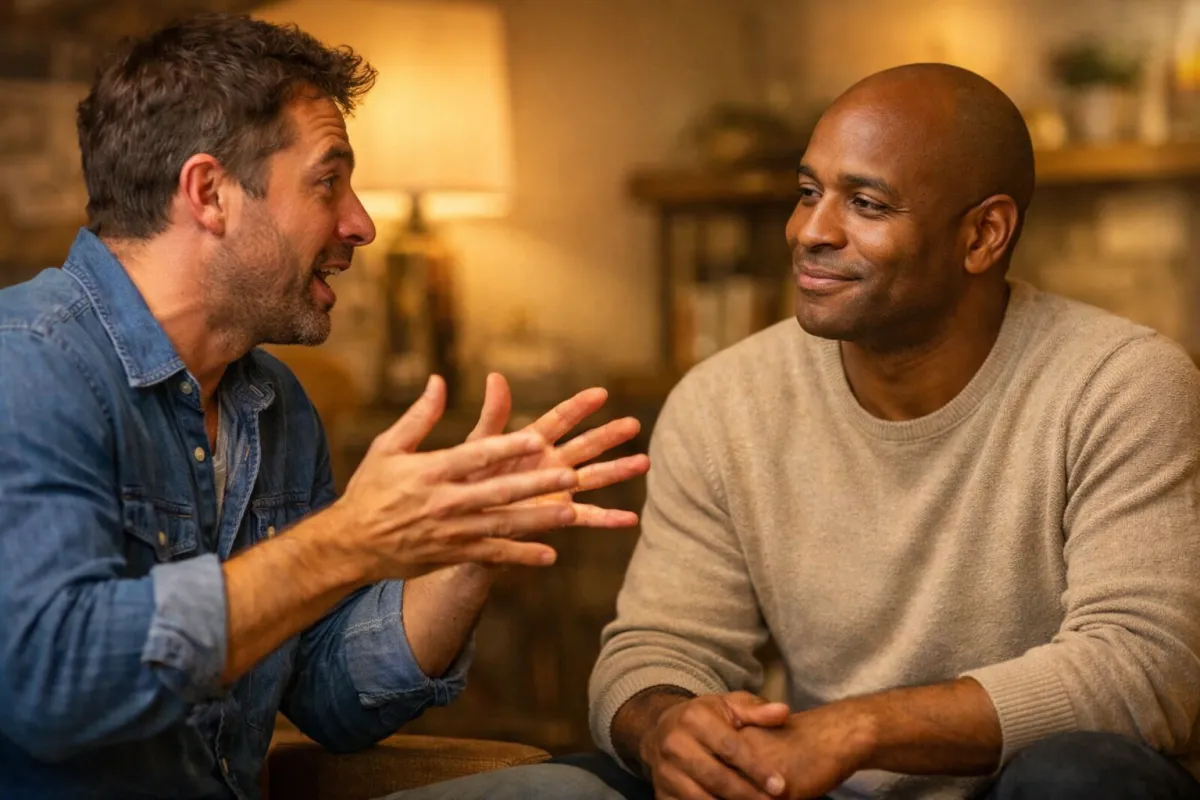
Are You Missing the Point? Turning Conflict into Collaboration
Conflict feels like a battle. When someone criticizes you or directs anger your way, your heart pounds, your muscles tense, and your mind races to find the right words for a counter-attack. It is a deeply human response, wired into our biology for survival. But what if the point of conflict isn't to win? What if it's an opportunity to connect?
When we are caught in the heat of a disagreement, our focus narrows. We fixate on being right, on defending our honor, or on making the other person see our point of view. In doing so, we often miss the real message hidden beneath the anger or criticism. We miss the point.
At Serene Health and Wellness, we believe that learning to navigate conflict is fundamental to your mental and emotional well-being. Chronic conflict creates stress, anxiety, and a sense of isolation. Learning to transform these tense moments into collaboration can be one of the most healing skills you ever develop. This guide will offer strategies to handle criticism, defuse anger, and reframe difficult conversations to create understanding and peace.
Why We React the Way We Do

Understanding your reaction to conflict is the first step toward changing it. When you perceive a verbal attack—whether it's a sharp critique from a partner or an angry outburst from a family member—your brain’s amygdala can trigger a "fight-or-flight" response. This floods your body with adrenaline and cortisol, the stress hormone.
In this heightened state, your ability to think logically and empathetically plummets. You are not operating from a place of calm and reason; you are operating from a place of survival. This is why arguments so often escalate. Both people feel threatened and are simply reacting to that threat, creating a vicious cycle of defensiveness and attack.
The key to breaking this cycle is not to suppress your feelings, but to learn how to manage your initial reaction. By creating a small pause between the trigger and your response, you give your rational brain a chance to come back online. This is where the real work of collaboration begins.

The Art of Redirecting Negative Energy
Imagine someone throws a heavy ball directly at you. Your first instinct might be to try to catch it, but you risk getting knocked over. Your second instinct might be to throw it back, but that just starts a game of painful catch. A third option is to step aside and guide its momentum safely to the ground. This is the essence of redirecting negative energy in a conversation.
Instead of meeting anger with anger or defensiveness with more defensiveness, you acknowledge the energy and guide it toward a more constructive path.

Handling Criticism with Grace
Criticism, even when delivered poorly, often contains a nugget of truth or a hidden need. The challenge is to find it without getting lost in the pain of the delivery.
Real-Life Scenario: Your partner says, "You never clean up after yourself. The kitchen is always a disaster because of you."
Defensive Reaction: "That's not true! I cleaned it yesterday. You’re the one who leaves things out!"
Redirecting Response: "It sounds like you're feeling really stressed and overwhelmed by the state of the kitchen."
This response does several things. It avoids a fight over the "facts" (who is messier). It validates their feeling (stress). It opens the door for a real conversation about the underlying issue, which might be a need for more support or a more balanced division of labor. You have redirected the conversation from blame to shared feelings.
Strategies for Defusing Anger
When someone is angry, they are emotionally flooded. They are not in a state to listen to your logic or your side of the story. Your primary goal is not to win the argument, but to help them feel safe and heard so their emotional intensity can decrease.

Listen to Understand, Not to Reply
This is the most powerful tool in your emotional first-aid kit. When someone is venting, they need to empty their emotional bucket. Don't interrupt, don't correct them, and don't plan your rebuttal. Just listen. Use your whole body: turn towards them, make gentle eye contact, and put away all distractions. Your focused attention is a powerful de-escalator.
Use Validating Language
Validation is not agreement. It is simply acknowledging that their feelings are real for them. It signals, "I see your pain."
Real-Life Scenario: A friend calls you, furious about a misunderstanding. "I can't believe you told Sarah about my problem! I trusted you!"
Invalidating Reaction: "I didn't tell her everything! You're overreacting."
Validating Response: "I can hear how hurt and betrayed you feel. It makes complete sense that you would be angry with me right now. I am so sorry that my actions caused you pain."
This response immediately defuses the situation. By accepting and validating their anger, you prove you are not a threat. You are an ally who is willing to hear them. Only after they feel heard can you move toward explaining your perspective or working toward a resolution.

Reframing the Conversation for Positive Outcomes
Once the emotional intensity has lowered, you can begin the work of reframing the conversation from a conflict into a collaborative project.
Find the "We"
Conflict often creates a "you vs. me" dynamic. To shift this, start using "we" language. This subtly reframes the problem as something you both face together.
Instead of: "You need to stop spending so much money."
Try: "How can we create a budget that makes us both feel secure?"
Instead of: "You always interrupt me."
Try: "How can we make sure we both feel heard when we talk?"
Focus on Needs, Not Positions
In any conflict, people take positions. "I want you to call me more." "I want you to be more independent." These are positions. Beneath every position is a universal need: for connection, for respect, for security, for autonomy. You can't compromise on a position, but you can find creative ways to meet both people's needs.
Real-Life Scenario: A parent and a teenager are arguing about a curfew. The parent's position is "Be home by 10 PM." The teen's position is "I want to stay out later."
The parent's underlying need is for safety and peace of mind. The teen's underlying need is for autonomy and social connection.
Instead of battling over the time, a collaborative conversation would explore these needs. "It seems like you need to feel trusted and have freedom with your friends. I need to know that you are safe. How can we come up with a plan that helps you have that freedom while also giving me peace of mind?"
This reframing opens up possibilities: a check-in text, a plan for a safe ride home, or different curfews for different activities. The conflict over a number becomes a creative problem-solving session.
Conclusion: The Path to Connection
Turning conflict into collaboration requires you to redefine what it means to "win." Winning is not about having the last word or proving you are right. Winning is preserving the relationship. It is about creating a connection so strong that it can withstand the pressure of a disagreement.
This work is not easy. It requires you to be the calm in the storm. It requires you to put your ego aside and listen with an open heart. But the rewards are immeasurable. Each conflict you navigate with empathy builds a deeper layer of trust and resilience in your relationships.
The next time you feel the heat of a disagreement, take a breath. Ask yourself: "What is the point I might be missing?" Look past the angry words and search for the vulnerable need beneath. By choosing to listen and validate, you turn a potential battle into a bridge for collaboration and healing.
