
The Science Behind Positive Thinking: How It Transforms Your Brain
Your thoughts physically shape your brain. Every time you focus on a specific idea, you trigger a cascade of chemical and electrical signals that alter your neural architecture. Positive thinking goes far beyond simple optimism or toxic positivity. It represents a biological process that fundamentally changes how you perceive, interact with, and navigate the world around you.
Understanding the science behind positive thinking gives you the power to take control of your mental habits. We will explore the concrete neuroscience of optimism, examining how neuroplasticity, dopamine, and stress regulation work together to reshape your mind. By incorporating insights from Stanford neuroscientist Andrew Huberman, we will uncover exactly how your brain adapts to your thought patterns. Finally, we will break down practical, science-backed strategies to cultivate a resilient and positive mindset.
The Neuroscience of Optimism: Rewiring the Brain
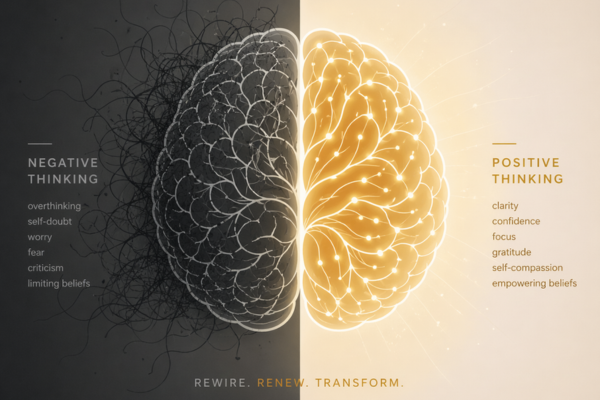
The brain is not a static organ. It constantly changes and adapts through a process called neuroplasticity. This term refers to your nervous system's ability to change its physical structure and function in response to experience and thought. When you consciously practice positive thinking, you actively participate in self-directed neuroplasticity.
Scientists often use the phrase, "Neurons that fire together, wire together." When you repeatedly focus on positive outcomes or express gratitude, you strengthen the neural pathways associated with those positive states. Over time, these pathways become thicker and more efficient. As a result, your brain naturally defaults to optimism because that route has become the path of least resistance.
Andrew Huberman frequently discusses the mechanics of neuroplasticity. He points out that changing your brain requires two key components: intense focus and deep rest. When you actively try to reframe a negative situation into a positive one, you engage your prefrontal cortex. This effort releases acetylcholine, a neuromodulator that highlights specific neural circuits for change. Your brain essentially marks these optimistic thought patterns for reinforcement. Later, during sleep or deep rest, your brain solidifies these new connections. Positive thinking is not a passive trait; it is an active, biological skill you build through repetition and rest.

Dopamine: The Motivation Molecule
People often misunderstand dopamine as the "feel-good" or reward chemical. However, neuroscience reveals a much more complex picture. Dopamine primarily acts as the molecule of motivation, pursuit, and craving. It drives you to seek out goals and keeps you moving forward, especially when you face friction.
Positive thinking directly influences your dopamine system. When you anticipate a good outcome, your brain releases a baseline level of dopamine. This release gives you the energy and drive required to pursue your goals. If you constantly dwell on worst-case scenarios, you suppress this dopamine release, leaving yourself feeling lethargic and unmotivated.
Huberman emphasizes a crucial concept regarding dopamine: you must learn to attach dopamine to the effort process, not just the final reward. If you only feel positive when you cross the finish line, you will struggle to maintain motivation during the hard work required to get there. Positive thinking involves telling yourself that the effort itself is rewarding. By internally celebrating small milestones and praising your own persistence, you trigger micro-doses of dopamine. This self-generated dopamine keeps your energy levels high and reinforces the positive neural circuits you are trying to build. You essentially train your brain to enjoy the climb, not just the view from the summit.

Stress Regulation: Calming the Amygdala
Your brain comes equipped with a highly sensitive threat-detection center called the amygdala. When you experience stress, anxiety, or negative thoughts, the amygdala sounds the alarm. It activates your sympathetic nervous system, flooding your body with cortisol and adrenaline. While this fight-or-flight response keeps you safe in dangerous situations, chronic activation impairs your cognitive function and physical health.
Constant negative thinking keeps your brain in a state of high alert. This chronic stress physically shrinks the prefrontal cortex, the area of the brain responsible for logical thinking, emotional regulation, and decision-making.
Positive thinking acts as a powerful counterbalance. When you consciously focus on positive frameworks, you engage the parasympathetic nervous system, which promotes rest and digestion. This shift reduces cortisol levels and quiets the amygdala. Huberman notes that managing your physiological state is the first step to managing your psychological state. You cannot easily force positive thoughts when your nervous system is trapped in a panic response. Using physiological tools, such as controlled breathing patterns, down-regulates your nervous system. Once your body feels safe, your brain regains the capacity to engage in positive, forward-thinking cognitive processes.

Practical Ways to Cultivate a Positive Mindset
Understanding the neuroscience is only half the battle. You must translate these biological principles into daily habits to truly transform your brain. Here are actionable, science-backed methods to integrate positive thinking into your routine.
Practice Gratitude Daily
Gratitude represents one of the most effective ways to rewire your brain for positivity. Taking time to acknowledge the good things in your life forces your brain to scan your environment for positive stimuli. This scanning process strengthens the neural pathways associated with optimism.
To maximize the neuroplastic benefits, go beyond simply listing things you feel thankful for. Engage deeply with the feeling of gratitude. Recall a specific moment someone helped you, and vividly remember the emotional resonance of that interaction. This deep emotional engagement releases serotonin and dopamine, cementing the positive neural connections. Make it a habit to write down three specific, detailed things you feel grateful for each morning or evening.
Visualize the Process, Not Just the Goal
Visualization is a popular tool for building a positive mindset, but people often execute it poorly. Merely picturing yourself succeeding at a goal can actually trick your brain into thinking you have already achieved it, causing a drop in dopamine and motivation.
Science suggests a different approach. Instead of only visualizing the finish line, visualize the process and the friction you will encounter along the way. See yourself facing a difficult challenge, feeling the frustration, and then successfully overcoming it. Huberman points out that visualizing the successful management of friction primes your nervous system to handle real-world stress. This type of realistic, process-oriented visualization builds genuine resilience and a robust, grounded form of positive thinking.
Reframe Negative Thoughts
You will never completely eliminate negative thoughts, and trying to suppress them often makes them stronger. Instead, practice cognitive reframing. This technique involves catching a negative thought, pausing, and consciously choosing a different perspective.
When you make a mistake, your default thought might be, "I am terrible at this." Catch that thought. Engage your prefrontal cortex to rewrite the narrative. Change it to, "I am currently learning this skill, and mistakes are a necessary part of the growth process." This action requires effort and focus, which triggers the acetylcholine necessary for neuroplasticity. You are literally building a new biological bridge over the old, negative neural pathway. Over time, the reframed thought becomes your automatic response.

Transforming Your Mind Through Action
The science behind positive thinking proves that optimism is not an innate talent; it is a trainable skill. By leveraging neuroplasticity, managing your dopamine system, and regulating your stress response, you hold the power to physically alter your brain. Your daily thoughts dictate your neural architecture. Start small. Choose one practical habit, like a daily gratitude practice or process-oriented visualization, and commit to it. Through consistent effort and deep rest, you will gradually reshape your brain, paving the way for a more resilient, motivated, and positive life.
