
The Power of Affirmations: Do They Really Work?
Most people maintain a continuous, silent conversation with themselves from the moment they wake up until they fall asleep. Unfortunately, this internal monologue often leans heavily toward self-doubt, criticism, and anxiety. Affirmations offer a deliberate, strategic way to rewrite that internal script. Far from just a trendy self-help concept, these purposeful statements can fundamentally alter how you process information and approach challenges.
We will explore the concrete psychology and neuroscience behind positive self-talk to determine if and how these practices actually yield results. You will learn the mechanics of self-affirmation, discover how to avoid common psychological pitfalls, and understand exactly how to craft statements that resonate with your personal goals. By the end of this guide, you will have a highly practical toolkit to make affirmations a grounded, effective part of your daily routine.
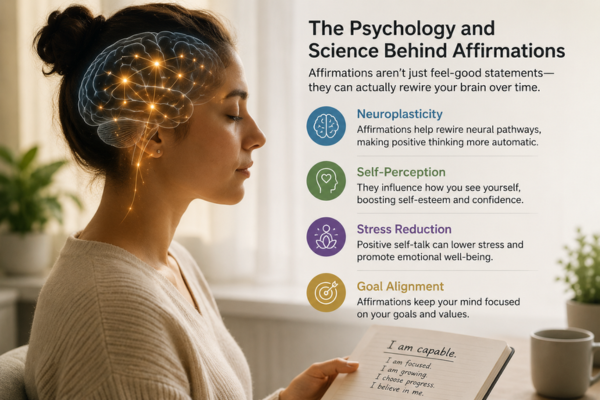
The Psychology and Science Behind Affirmations
Many people dismiss affirmations as wishful thinking. However, decades of psychological research provide a strong foundation for their effectiveness. The core framework comes from self-affirmation theory. This psychological theory suggests that people possess a fundamental desire to maintain a global sense of self-integrity. When you face a threat to your competence or self-worth, reflecting on your core values can restore your confidence and reduce defensive reactions.
Your brain physically changes based on the thoughts you repeat. Every time you focus on a specific concept, you strengthen the neural pathways associated with that idea. If you constantly tell yourself that you are terrible at public speaking, your brain reinforces that pathway. Over time, that negative belief becomes your automatic default response. Affirmations work by consciously building new, positive neural pathways to compete with and eventually override the negative ones.
Furthermore, affirmations engage a network of neurons in your brainstem known as the Reticular Activating System (RAS). Your RAS acts as a biological filter. It sifts through the millions of bits of sensory information you encounter every second, bringing only what it deems important to your conscious attention. When you regularly repeat specific goals and positive statements, you program your RAS to notice opportunities and resources that align with those thoughts.

Common Misconceptions About Affirmations
To understand the power of affirmations, you must first clear away the myths surrounding them. The most pervasive misconception revolves around magical thinking. Affirmations do not magically deposit money into your bank account or instantly cure physical ailments. They are not a substitute for hard work, strategy, or professional medical care. Instead, they function as cognitive primers that prepare your mind to take the necessary actions to achieve your goals.
Another major issue is the trap of toxic positivity and cognitive dissonance. Many people try to force overly grandiose statements that their brain fundamentally rejects. If you currently struggle with severe debt, standing in front of a mirror and shouting, "I am a multi-millionaire," will likely backfire. Your brain recognizes the lie. This creates a psychological clash called cognitive dissonance, which actually increases your stress and highlights your current lack of resources.
Effective affirmations bridge the gap between where you are and where you want to be without triggering your internal alarm bells. They must remain rooted in reality and possibility. Rather than making impossible claims, the best affirmations focus on your capacity to grow, learn, and manage the challenges directly in front of you.
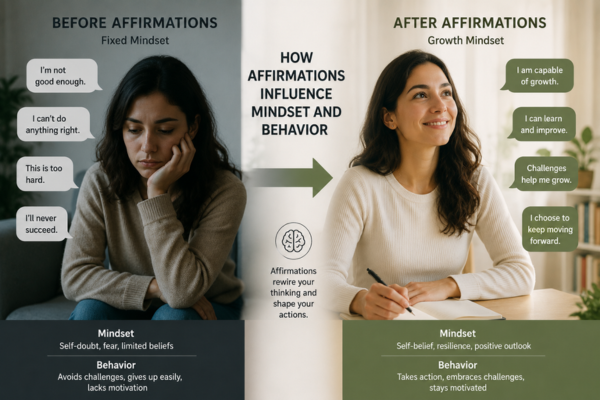
How Affirmations Influence Mindset and Behavior
The words you choose to focus on directly impact your emotional state and your subsequent behavior. Affirmations serve as an intentional interruption to negative thought loops. When you feel overwhelmed by a project at work, your default setting might trigger panic and procrastination. A well-practiced affirmation acts as a mental anchor, pulling you back to a state of calm focus.
By shifting your perspective, affirmations build a deep sense of self-efficacy. Self-efficacy refers to your belief in your own ability to succeed in specific situations. When you consistently remind yourself of your resilience and problem-solving skills, you approach obstacles differently. You view setbacks as temporary hurdles rather than permanent character flaws.
This mindset shift directly alters your behavior. People with high self-efficacy put more effort into their tasks, persist longer when facing difficulties, and recover more quickly from failures. Affirmations essentially coach your brain to stay engaged and proactive. You stop wasting energy on self-pity and channel that energy into finding actionable solutions.

Practical Tips for Creating Effective Affirmations
Understanding the science is only half the battle. You must translate those principles into highly personalized statements that resonate with your unique brain. Generic affirmations pulled from a motivational book rarely carry the emotional weight necessary to drive real change. Use the following strategies to craft a customized list of powerful affirmations.
Write in the Present Tense
Your brain responds most strongly to current realities. When you write affirmations in the future tense, you subconsciously tell your brain that the desired state is always just out of reach. Phrasing your statements as future promises severely dilutes their impact.
Instead of saying, "I will become a confident leader," reframe it to, "I am developing my leadership skills every day." Instead of, "I will stop getting angry," try, "I am learning to respond to frustration with patience." The present tense grounds the statement in the here and now. It forces your brain to recognize the effort you are currently making, which builds immediate momentum.
Focus on Specific, Actionable Goals
Vague statements generally yield vague results. A broad affirmation like "I am successful" lacks the specific direction your brain needs to take action. You need to give your Reticular Activating System clear instructions on what to look for.
Tailor your affirmations to the specific challenges you face right now. If you want to improve your health, avoid saying, "I am perfectly healthy." Instead, craft a statement like, "I am making choices today that nourish my body and increase my energy." If you struggle with networking, use an affirmation like, "I am capable of holding engaging, meaningful conversations with new people." Specificity makes the affirmation believable and actionable.
Align with Your Personal Values
The most powerful affirmations tap directly into your core values. When an affirmation aligns with what you truly care about, it carries a heavy emotional charge. This emotional resonance makes the statement much "stickier" for your brain, accelerating the neuroplasticity process.
Take a moment to identify your highest priorities. Do you value creativity, family, integrity, or freedom? Build your affirmations around those pillars. If you highly value family connection, an affirmation like, "I am fully present and engaged when I spend time with my children" will motivate you far more than a generic statement about work-life balance. Value-based affirmations remind you why you are putting in the effort in the first place.
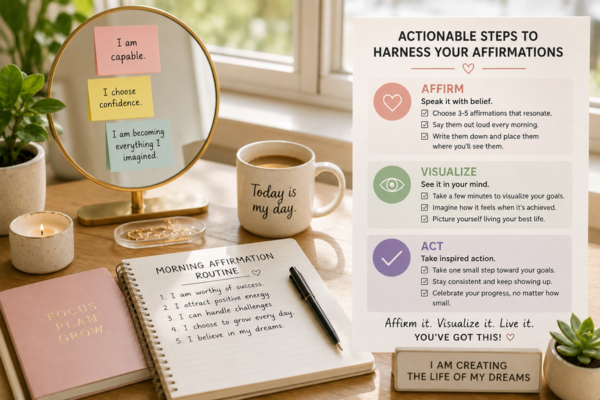
Actionable Steps to Harness Your Affirmations
Affirmations are not a passive magic trick; they require consistent, active engagement. You cannot just write them down once and expect your life to transform overnight. Like building a muscle, changing your neural pathways requires repetition and persistence.
Start by auditing your current internal monologue. Notice the specific areas where you tend to criticize yourself. Use the strategies outlined above to draft three customized, present-tense, value-aligned affirmations to counter those negative thoughts. Write these three statements on a sticky note and place it somewhere you will see it daily, like your bathroom mirror or your computer monitor. Commit to reading them out loud, with conviction, every single morning for the next thirty days. As you build this habit, you will gradually reshape your mindset and unlock a more resilient, proactive approach to your life.
